
(But We’re Professionally Trained to Act Like It’s Fine)
There are a lot of beautiful things about working in a coffee shop. The smell of espresso in the morning. The regulars who don’t need to order because you already know what they want. The quiet little rhythm of steaming milk, pulling shots, handing someone a drink that makes their whole face reset for a second.
And then there’s the rest of it.
Because for every lovely customer who walks in with basic decency and a functioning sense of awareness, there is another one who seems to believe the coffee bar is a stage, a negotiation room, or some kind of live-action personality test for the staff.
To be clear, this is all lighthearted. Mostly. Nobody’s keeping a burn book behind the counter. We’re not in the back whispering your order to each other like it just came through on a federal wiretap.
But there are a few things that happen so often, and so consistently, that they deserve to be honored properly. Not with anger. Just with the kind of tired honesty that coffee shops run on.
1. Ordering While Looking at Literally Anything Except the Menu
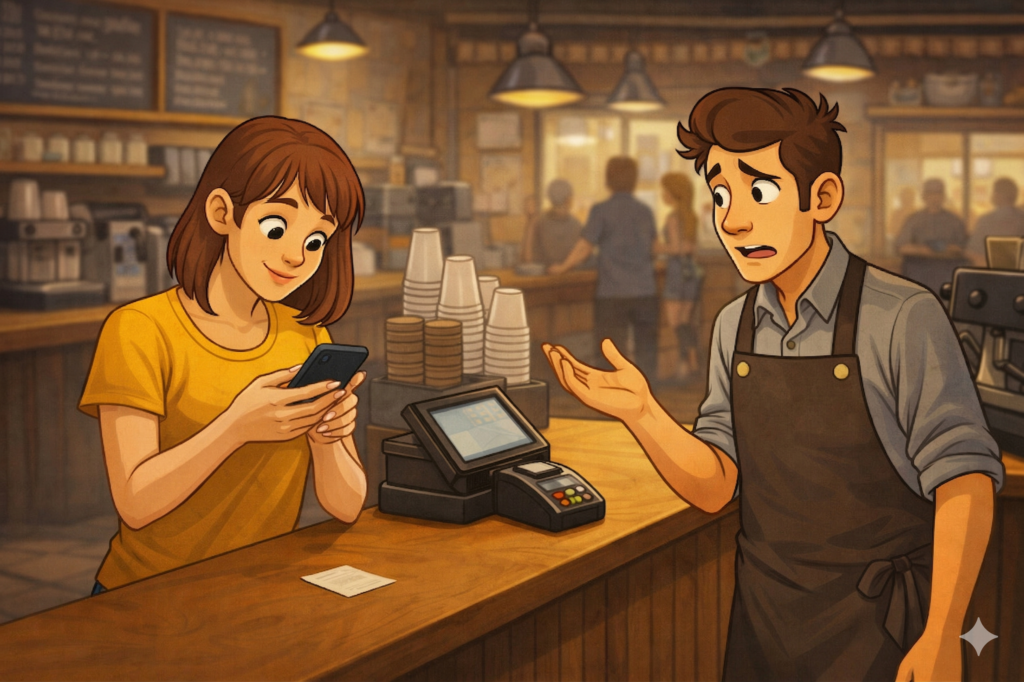
There is a special kind of confidence required to walk up to the register, never once look up, and begin constructing a drink like you’re receiving it in a dream.
You’re staring at your phone. Your friend is talking. You have not acknowledged the menu board in any visible way. And yet here we are.
“Do you have… like… some kind of vanilla thing?”
Yes. Probably. But this would be going a lot better if both of us were participating.
There is always a brief moment where the barista becomes less of a person and more of a customer service sherpa, gently guiding someone through terrain they could’ve studied for six seconds before stepping forward.
2. Waiting Until the Drink Is Finished to Mention the Fifteen Modifications
A barista can survive a complicated order. That’s not the issue. We work in coffee. Complicated is part of the ecosystem now. Half the drinks in modern cafe culture sound like someone lost a bet.
The problem is timing.
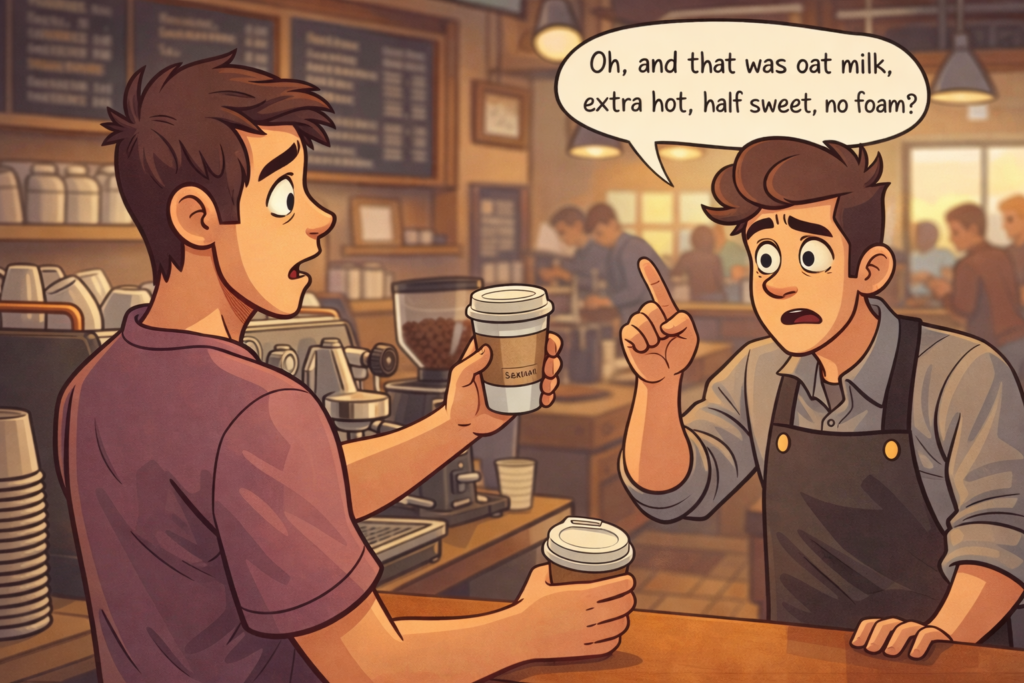
If you wait until the milk is steamed, the espresso is pulled, the lid is halfway on, and then suddenly say, “Oh, and that was oat milk, extra hot, half sweet, no foam, right?” you are no longer ordering. You are introducing chaos after the fact.
That’s not a clarification. That’s a plot twist.
3. The Hover
This one is difficult to explain to people who’ve never worked behind a counter, but every barista knows exactly what it is.
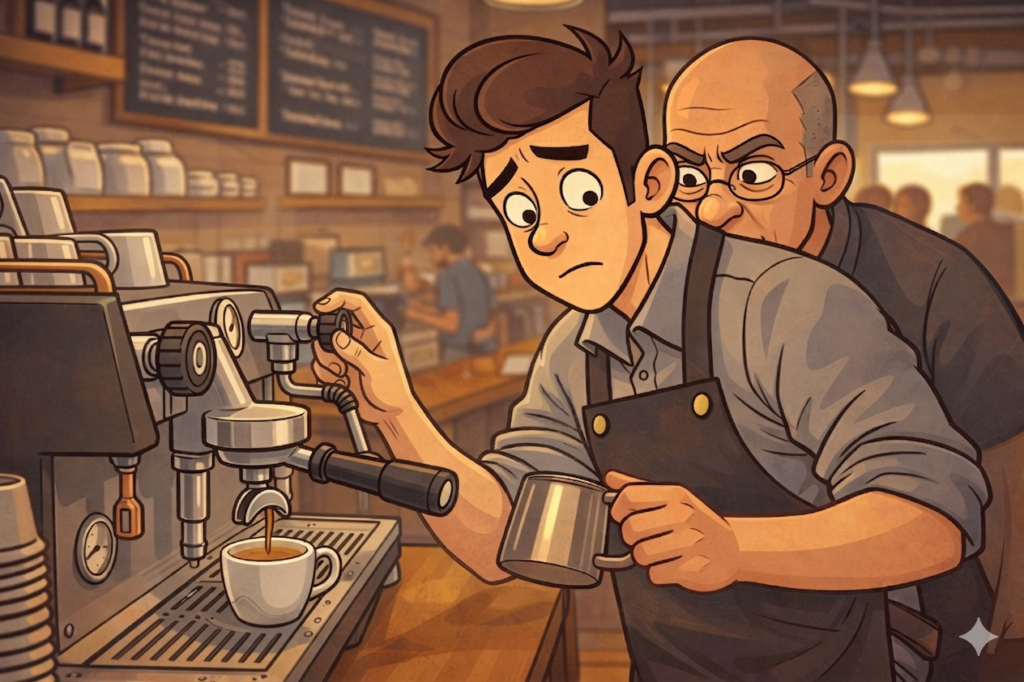
The hover is when someone orders, then immediately stands directly in front of the espresso machine and watches every move like they’re observing surgery.
Not off to the side. Not in a normal waiting position. Right there. Close enough to make everyone aware of their presence. Not speaking. Just radiating expectation.
It’s never aggressive enough to call out. It’s just intense enough to be annoying.
We know you want your drink. That’s why we’re making it. The staring does not speed up the espresso. If anything, it makes the milk nervous.
4. Asking for a Recommendation and Rejecting Every Recommendation
This happens constantly.
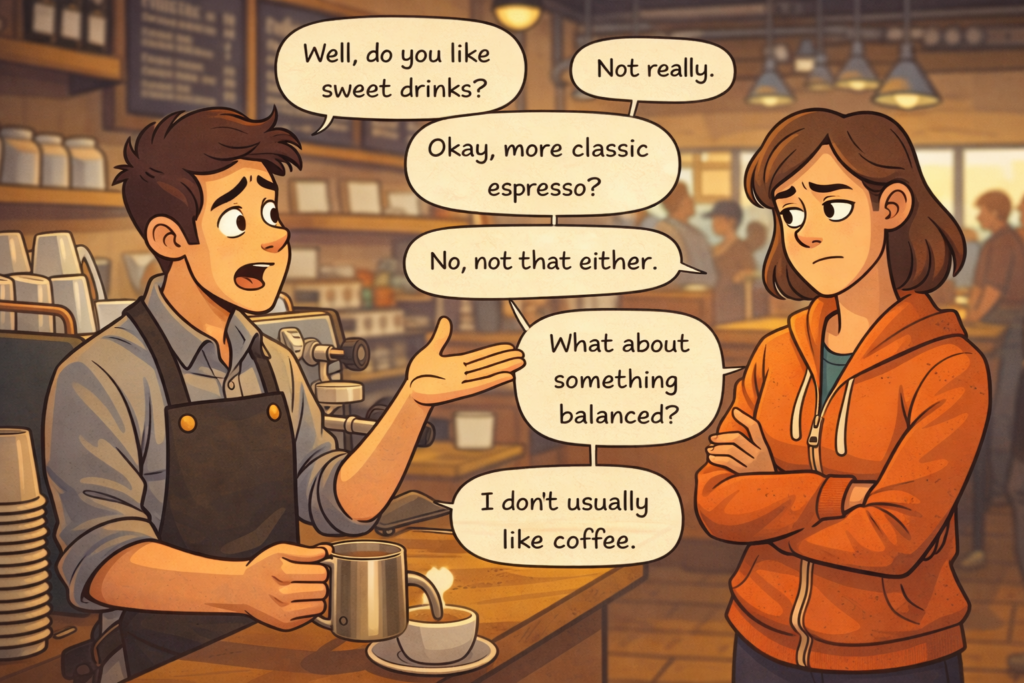
“What do you recommend?”
Great question. Happy to help.
Then the suggestions begin.
“Well, do you like sweet drinks?”
“Not really.”
“Okay, more classic espresso?”
“No, not that either.”
“What about something balanced?”
“I don’t usually like coffee.”
At some point, this stops being a recommendation conversation and turns into two strangers discovering, in real time, that one of them should have ordered a chai.
There is no shame in not knowing what you want. But there is a limit to how many doors we can open before we realize you were never coming into the house.
5. Treating “Secret Menu” Content Like Constitutional Law
The internet has done many things to coffee culture, and not all of them have been helpful.
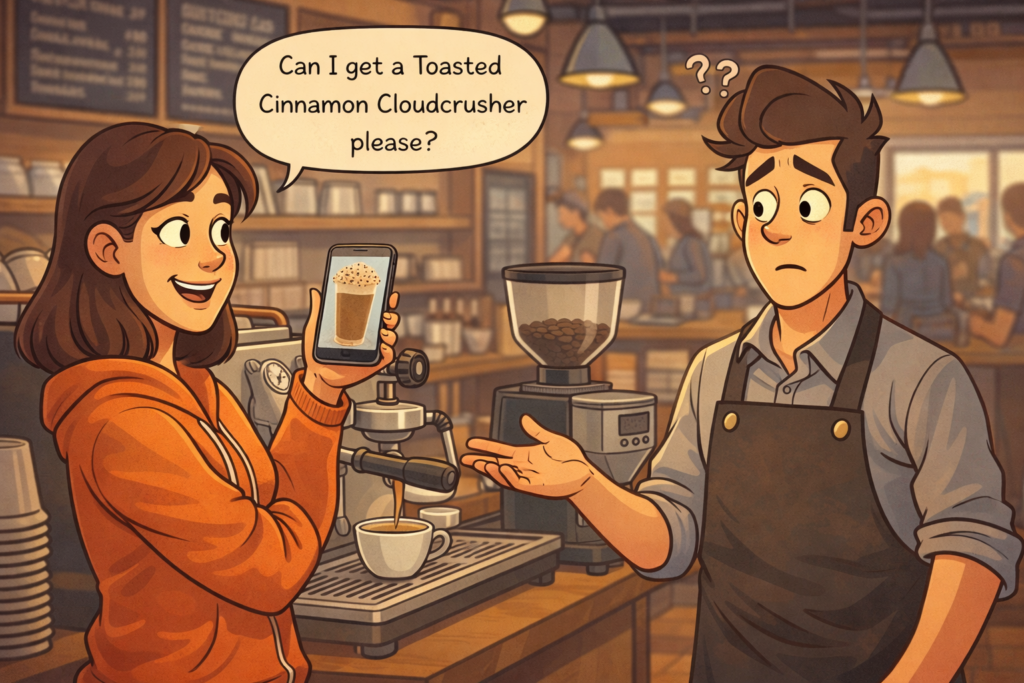
One of the more exhausting developments is the belief that if a drink exists on TikTok, every coffee shop in America should know exactly how to make it.
You walk in and order something called a Toasted Cinnamon Cloudcrusher or an Iced Cookie Butter Avalanche like those words mean anything in a real building.
They do not.
That’s not a menu item. That’s an online hallucination.
We are not offended by custom drinks. We are offended by the assumption that the entire coffee industry has been quietly briefed on content creator beverages by some national beverage council.
6. The Last-Minute Camper Cleanup
Coffee shops have a sacred social contract. You can sit, work, read, meet a friend, stare into the middle distance, whatever. That’s part of the charm. Nobody reasonable is upset that you spent time here.
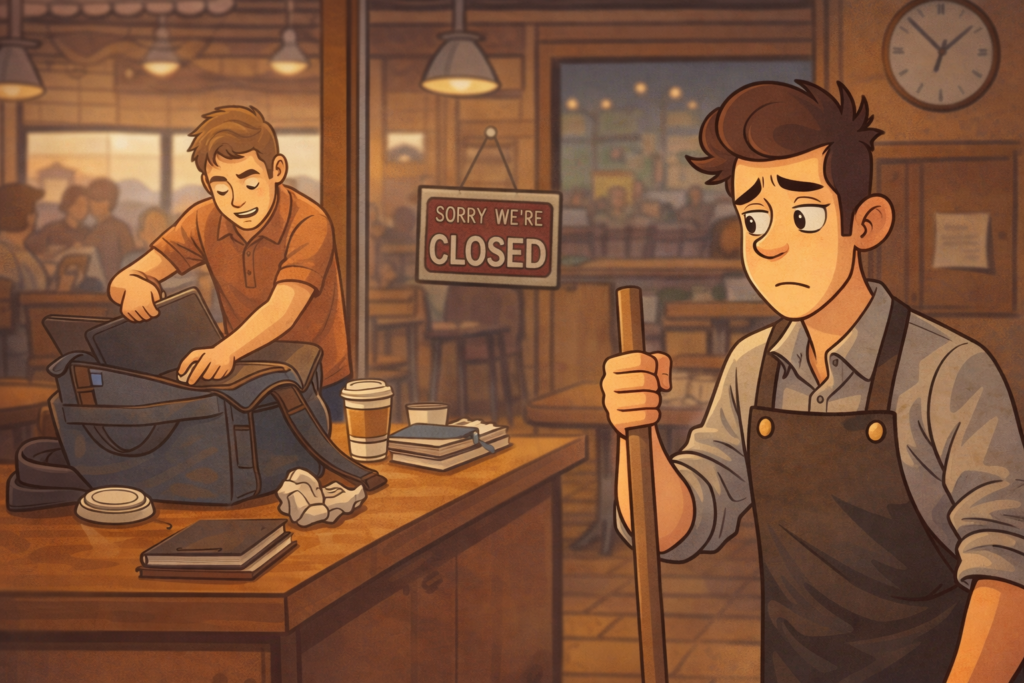
But if the shop is closing in three minutes and you suddenly begin packing up like you’ve just been informed of a natural disaster, that’s a problem.
Now we’re all waiting for your laptop charger, your tote bag, your scarf, your notebook, your second scarf, and somehow a full emotional reset before we can lock the door.
The posted hours were not a vague suggestion. Closing time is not when you begin considering whether you should leave. That decision was meant to happen earlier, back when the lights started changing and the chairs were making their little end-of-day noises.
7. Ordering for Someone Else With Zero Usable Information
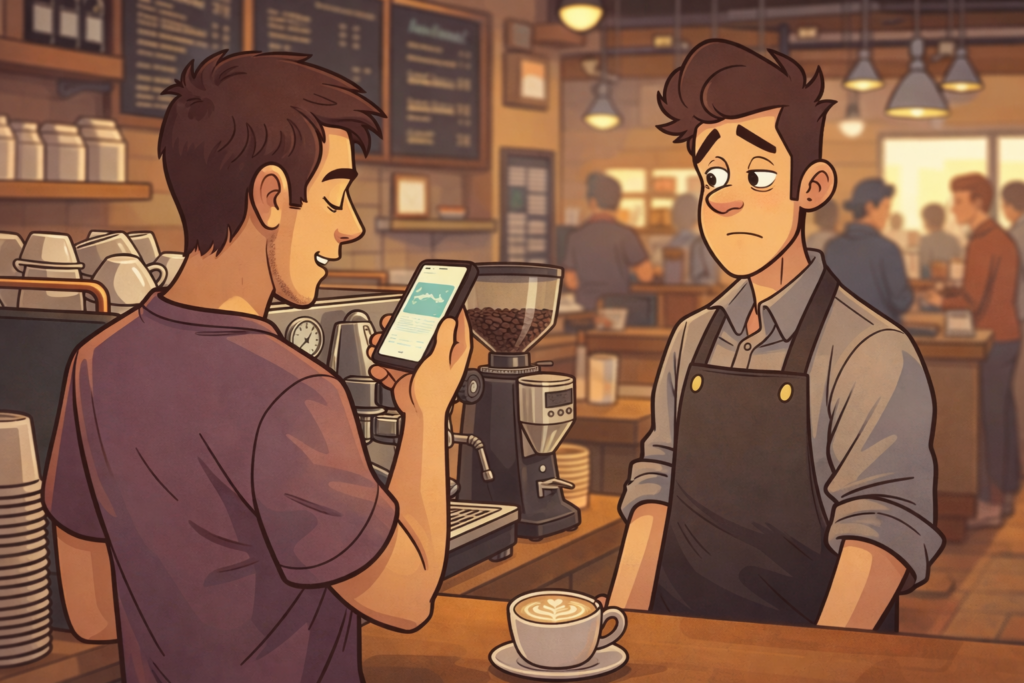
“I need a drink for my wife.”
Okay. What does she like?
“I don’t know. Coffee.”
Strong start.
Sweet? Not sweet? Hot? Iced? Milk preference? Flavor profile? Size? Has she ever consumed espresso willingly?
Nothing. No data. No clues. Just a man at a register trying to outsource marital intuition to a barista on a Tuesday afternoon.
Sometimes we can rescue it. Sometimes we build a perfectly reasonable drink and hope love carries the rest.
But it’s always a gamble, and somehow we’re the ones holding the dice.
8. The Fake Rush
Some customers are in a genuine hurry. That’s real. We get it. Life happens. People are late. Kids exist. Traffic is a spiritual burden. No issue there.
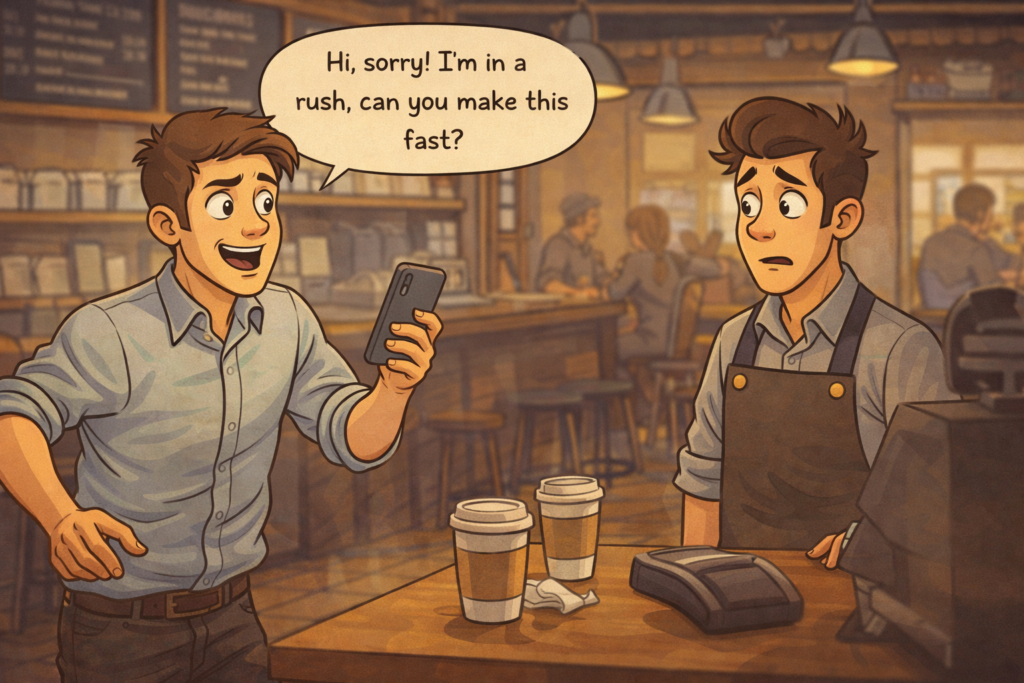
Then there’s the fake rush.
The person who arrives visibly frantic, orders with the energy of someone being chased, sighs dramatically during the wait, grabs the drink, and then remains in the shop for eleven more minutes adjusting their jacket and checking email.
That level of urgency was theater.
You were not in danger. You were performing pressure near the espresso machine.
And the wild part is that baristas can tell the difference immediately. We may not say anything, but internally the whole scene gets filed under nice try.
9. Snapping, Whistling, or Using the Counter Like a Doorbell
This one should not need to be said, and yet the world keeps giving us opportunities.
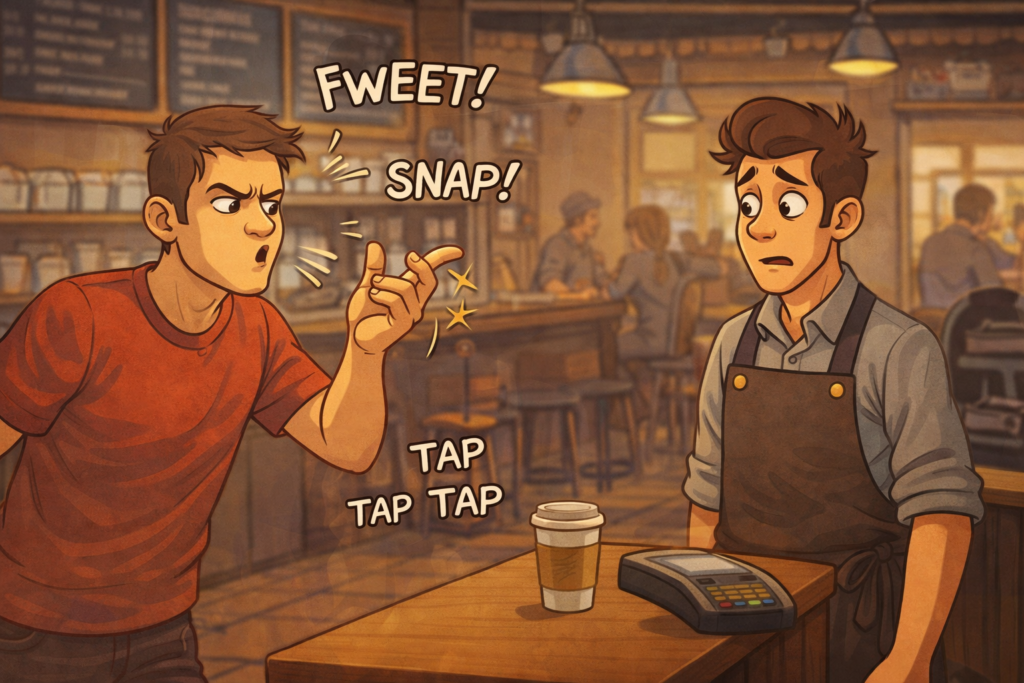
If your method of getting attention involves snapping your fingers, whistling, tapping the counter repeatedly, or leaning halfway over the bar like you’re trying to flag down ground crew at an airport, please know that every barista in the room has already formed an opinion.
Not a dramatic opinion. Just a stable, lasting one.
Coffee shops are still places where humans work. We can hear you. We can see you. A simple “hey” works just fine. Even silence works if we’re clearly in motion and helping someone else.
Nobody has ever improved the customer experience by becoming louder and more percussive.
10. Asking Why Your Drink Costs That Much, Then Listing the Reasons It Costs That Much
This is one of the great classics.
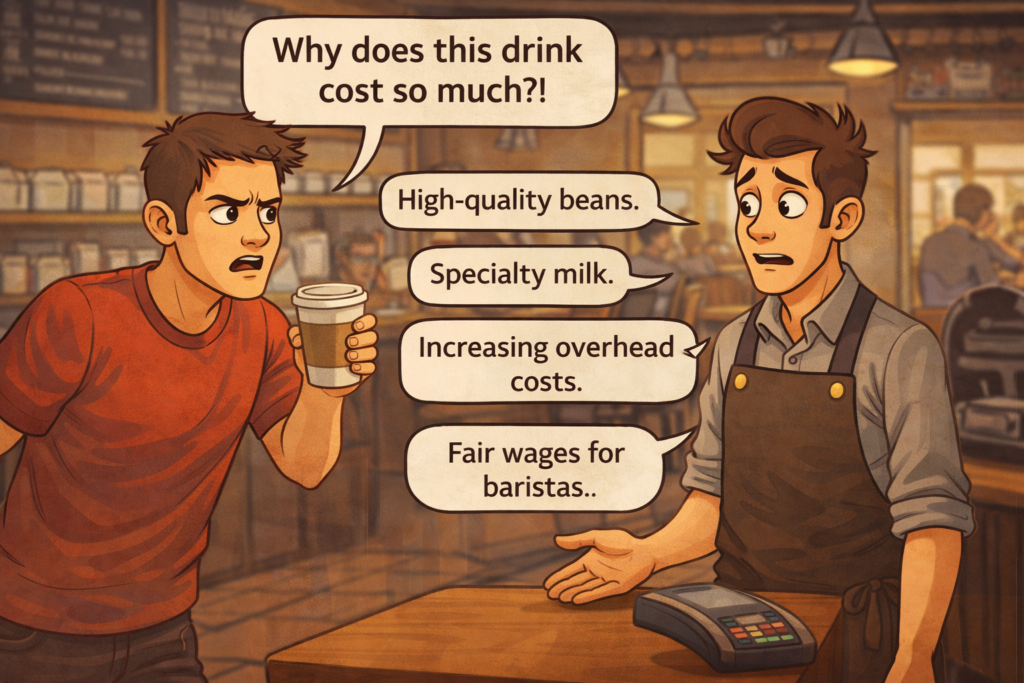
Someone orders a large iced latte with alternative milk, extra espresso, added syrup, cold foam, and some additional preference that requires both labor and ingredients, then looks at the total like we’ve personally betrayed them.
You did not order a coffee. You ordered a small production.
Beans cost money. Milk costs money. Cups cost money. Syrups cost money. Labor definitely costs money. The machine itself is basically a beautiful stainless steel invoice with steam coming out of it.
And yet people still act stunned that a handcrafted drink in a physical cafe, made by an actual person, costs more than a gas station drip coffee that’s been cooking since sunrise.
There is a strange fantasy some people carry that good coffee should be artisanal, customized, fast, memorable, and somehow priced like it emerged from the earth already prepared.
That has never been true.
In Defense of Customers, Since We Do Need You
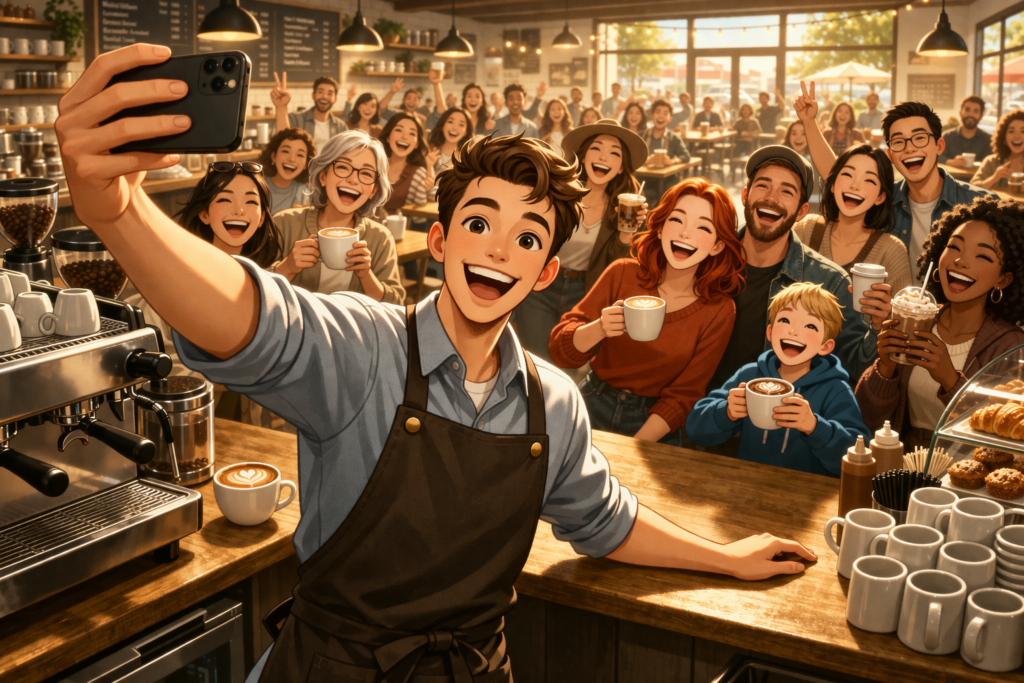
To be fair, most people are completely fine.
More than fine, actually. They’re kind. Patient. Funny. They tip when they can. They say thank you. They remember that there are people on the other side of the counter and not just caffeine machinery in human clothing.
Those people are the reason coffee shops become what they are.
The regular who always asks how your day’s going. The parent trying to hold it together before school drop-off. The quiet customer with the same order every morning. The person who comes in looking half-dead and leaves looking like they’ve re-entered the timeline. That’s the good stuff. That’s the part people don’t always see.
A coffee shop isn’t built only on coffee. It’s built on repetition, personalities, weird little habits, and the fact that people keep showing up for more than the drink.
Still, if you’ve ever hovered directly over the handoff counter while explaining your undocumented secret menu drink to a barista who has already had a long morning, just know this: we forgive you.
But we absolutely noticed.
Leave a Reply